Our process
How we work
A clear path from the first conversation to a system your team runs on its own. Every phase has an owner, deliverables, the evidence that it is done, and acceptance criteria you sign off.
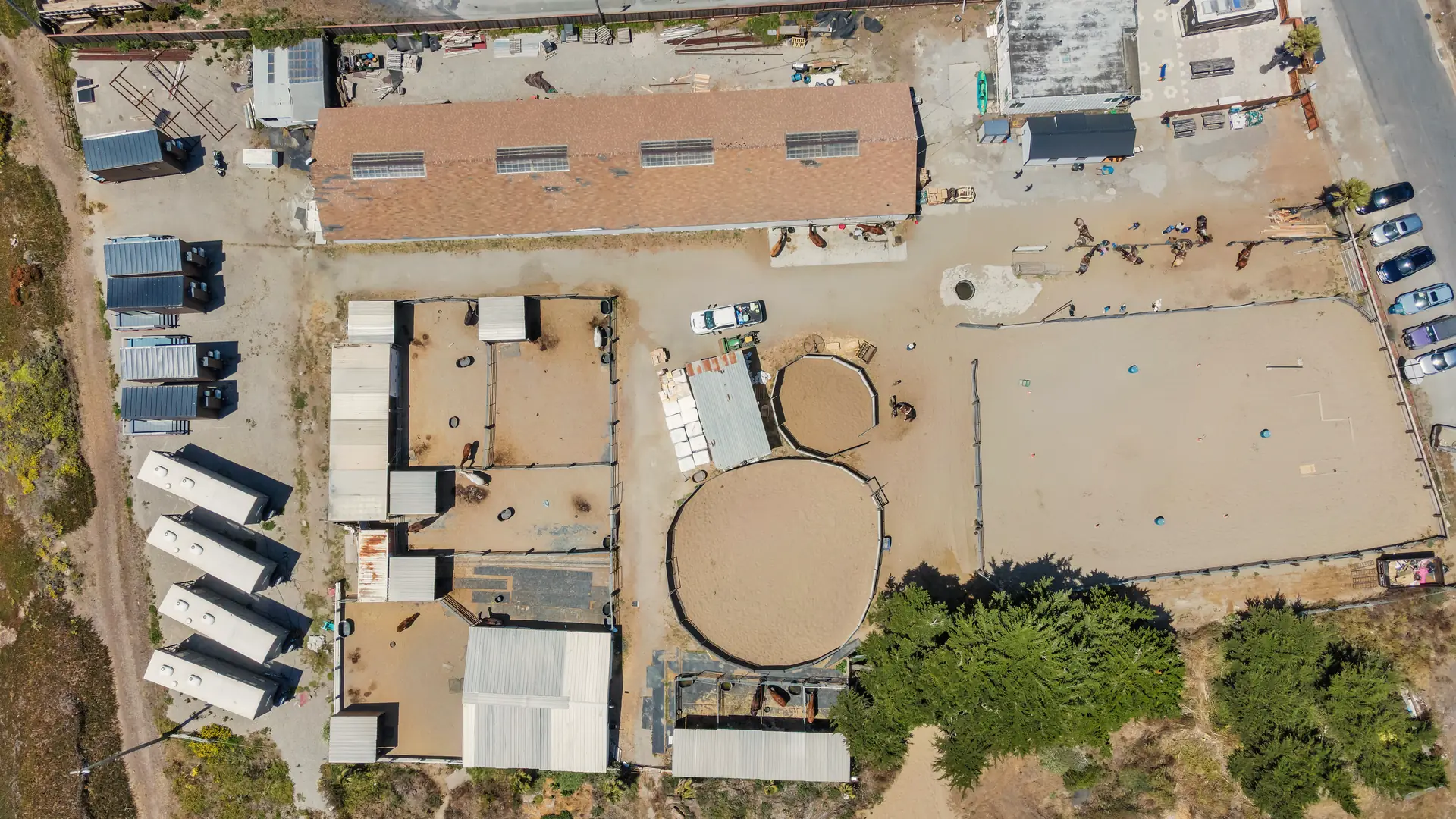
Photo: Ocean View Stables from directly above
1. Discovery
We learn how the work actually moves: who does what, where information lives, what breaks and what must keep working.
- You get
- A discovery summary and a prioritized roadmap
- Done when
- You agree the summary describes your operation accurately
2. Proposal and scope
A statement of work with deliverables, exclusions, dependencies, schedule and acceptance criteria, and the commercial terms that go with it.
- You get
- A quotation and statement of work to review and sign online
- Done when
- It is signed and any agreed deposit is paid
3. Solution design
Each requirement is mapped to how it will be met: a standard feature, configuration, custom development or an integration.
- You get
- A solution design with each requirement traced to a task and a test
- Done when
- You approve the design
4. Build
Configuration first, then data migration, integrations and any custom development, on a copy of the system, never your live one.
- You get
- Progress you can see in your client portal
- Done when
- Internal testing passes against the agreed test cases
5. User acceptance testing
Your team runs real scenarios with real data on the test copy and records what passed and what did not.
- You get
- Test scripts and a list of fixes with their status
- Done when
- You sign off the acceptance tests
6. Training and launch
Training by role, a cutover checklist with a way back, and launch day with us beside you.
- You get
- A training plan, guides and a launch checklist
- Done when
- The system is live and the checklist is complete
7. Stabilization and support handoff
A short period of close attention after launch, then a written handover to support.
- You get
- A support handover: what was built, where it is documented, how to get help
- Done when
- Open issues are closed or moved to support with your agreement
When the scope changes
It will, and that is normal. Each change is written up as a change request with the scope, the estimated effort and the effect on the schedule. You approve it before work starts. Nothing new is quietly absorbed into fixed-scope work, and nothing is billed that you did not approve.
What we need from you
- A decision-maker who can approve scope and sign off phases
- A named person on your side who owns the project day to day
- Time from the people who do the work, for discovery, testing and training
- Access to your current data, set up properly, never sent as passwords
Two ways to engage
A scoped project, or an engineer inside the operation
The phases above are how a scoped project runs. When the work is still being discovered, or nobody on your side has time to run a project, an engineer works alongside your team instead. The rules are the same either way: a written scope, changes approved before work starts, and everything tested on a copy first.
AI in our work
How we use AI, and why it keeps our prices down
Much of building a business system is repetitive: setting up fields and forms, writing and testing code, moving records, writing it all down. We use AI for that part. It is how we keep our services affordable for smaller operations: a family farm, a farrier with one truck, a small veterinary practice, a barn with a handful of staff.
What AI does in our work
- Drafts the setup from the discovery notes: fields, forms, reports and automations
- Writes code, and the tests that check it
- Moves records out of spreadsheets and old systems, and checks them against the originals
- Writes the guides, the training notes and the record of what changed
- Answers your phone, if you choose a voice assistant, and always says it is automated
What stays with people
- Deciding what to build, with you, in a written scope
- Reviewing the AI's work before it goes live, with Guided or Dedicated help
- Anything about money, safety, customer promises or animal health
- Training your team and being there at launch
- Signing off each phase with you
The saving shows up in the price: fewer hours for the same scope. Our prices are published by how much help you want. With Autopilot, AI sets things up from our industry templates and runs them, and a person helps by the hour when you need one; Guided and Dedicated add the people described here. See the prices.
Start with discovery
It is the shortest useful step, and it is worth doing even if you later build with someone else.